
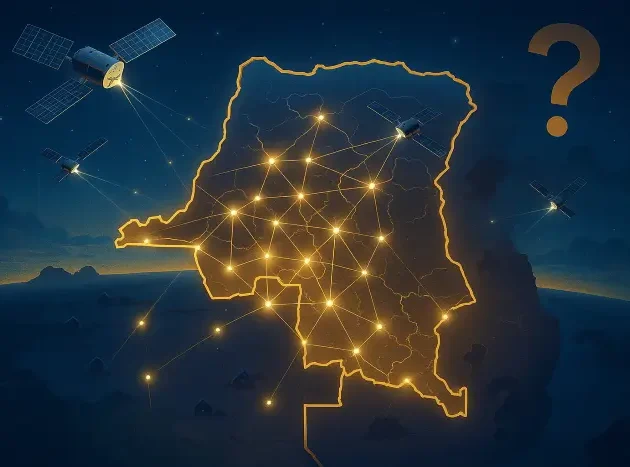
The Democratic Republic of Congo (DRC) has officially joined the Starlink network, marking a major milestone in the country’s quest for universal internet access.
With over 60% of Congolese citizens living in rural areas where connectivity is limited or nonexistent, Starlink’s satellite-based system is offering fast, reliable internet where fiber and 4G don’t reach.
🚀 What Is Starlink?
Starlink, developed by SpaceX, is a low-earth orbit satellite internet service providing broadband access worldwide, even in remote regions. Its rollout in the DRC includes:
- Speeds between 50–200 Mbps
- Low latency, ideal for video calls and digital services
- Coverage even in mountainous and forested zones
🌐 Narrowing the Digital Divide
The Congolese government praised the launch as a key tool for bridging the digital gap. Subscribed and subsidized Starlink kits are being deployed in:
- Rural health centers
- Remote secondary schools
- Local administration offices
Officials aim for 300,000 active connections by the end of 2026. In 2024, internet access in the DRC was below 25%.
📚 Early Results: Education and Telehealth Benefits
In areas like Kasai, North Kivu, and Tshopo, the immediate benefits include:
- Access to online educational platforms
- Participation in global virtual classrooms
- Improved telemedicine services in remote clinics
💰 Cost Remains a Challenge, But Falling
While current costs (~$30–40/month per household) remain high for some, prices are expected to drop as more satellites launch. The government is also planning targeted subsidies for schools, cooperatives, and small businesses.
🔄 A Technological and Social Shift
Starlink’s arrival is more than technological progress—it’s a social and economic enabler. It unlocks:
- New digital entrepreneurship opportunities
- Access to mobile banking and e-commerce
- Stronger regional and global integration
✅ Conclusion: A More Connected, Resilient DRC
With Starlink’s rollout, the DRC is taking a leap toward inclusive connectivity, empowering citizens across all regions to participate in the global digital economy. Challenges remain, but the future is now visibly brighter.