
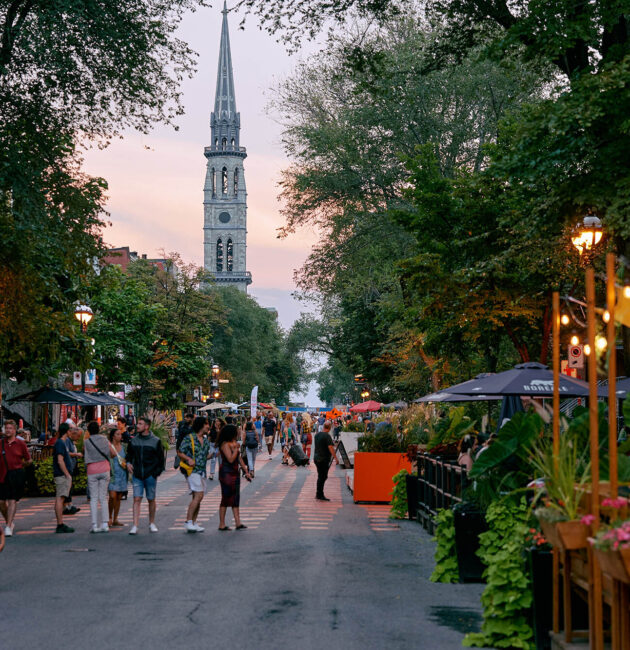
Montreal is reinventing itself by embracing green urbanism and innovative public spaces that redefine city living. In the face of climate change and urban sprawl, the metropolitan area is adopting creative and sustainable solutions to improve the quality of life for its residents.
Context and Challenges
The development of green urban projects is a key pillar of Montreal’s 2050 Urban Planning and Mobility Plan. This comprehensive strategy seeks to reimagine the territory by integrating:
- Ecological Transition: Protecting and expanding green spaces, curbing urban sprawl, and promoting biodiversity.
- Sustainable Mobility: Developing active and collective transportation networks while encouraging low-emission travel.
- Urban Innovation: Creating modern, inclusive public spaces that enhance social ties and residents’ well-being.
Innovative Initiatives
1. Green Alleys and Educational Spaces
Montreal is pioneering the establishment of green alleys in neighborhoods such as Mercier-Hochelaga-Maisonneuve. Through co-creation workshops led by Nature-Action Québec, urban areas have been transformed into vibrant community spaces that feature:
- Surface rehabilitation and demineralization,
- The planting of trees, shrubs, and perennials to boost biodiversity,
- Green corners that encourage relaxation and community interaction.
Learn more about the MHM Green Alleys Project 2025.
2. Urban Parks and Green Corridors
The city is also developing urban parks and green corridors to better manage extreme weather events while providing recreational spaces for all. These infrastructures contribute to:
- Improved air quality,
- Reduced urban heat island effects,
- The creation of leisure areas suitable for relaxation and physical activity.
3. Sustainable Mobility and Connected Public Spaces
As part of the 2050 Urban Planning and Mobility Plan, Montreal is promoting active mobility and the reinvigoration of its public spaces. Recent projects include:
- Extended, safe cycling lanes,
- Redesigned pedestrian pathways,
- Low-carbon collective transport infrastructures to lessen the city’s ecological footprint.
Impact and Future Prospects
These transformations are already showing positive results:
- Enhanced Quality of Life: Successful integration of green spaces and recreational areas improves well-being and community connectivity.
- Economic and Social Dynamism: New urban developments attract investments and stimulate local business activities.
- Urban Resilience: By placing sustainability at the core of its projects, Montreal is building infrastructures that can meet future climate and environmental challenges.
Conclusion
Montreal is emerging as a pioneering city in green urbanism and sustainable innovation. By transforming its alleys, parks, and public spaces, Montreal offers its citizens a healthier, more connected, and future-ready environment. This approach serves as an inspiration for other Canadian cities to embrace urban development that respects both nature and human needs.