
By La Touche Team – July 6, 2025
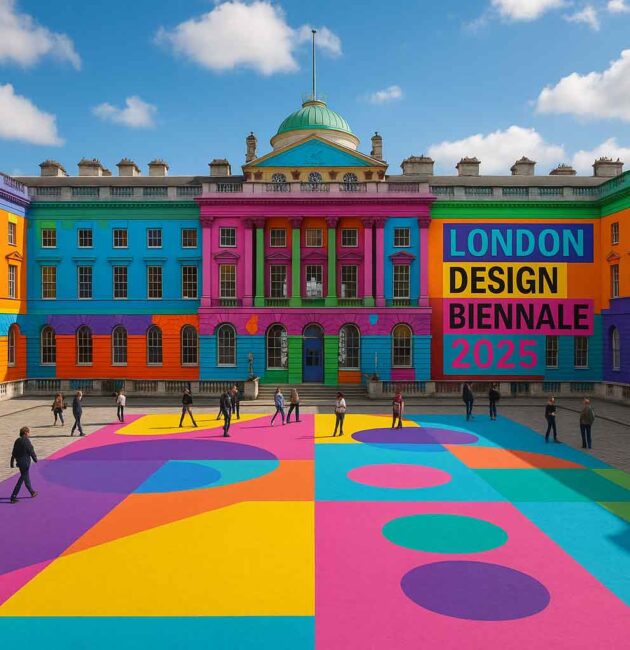
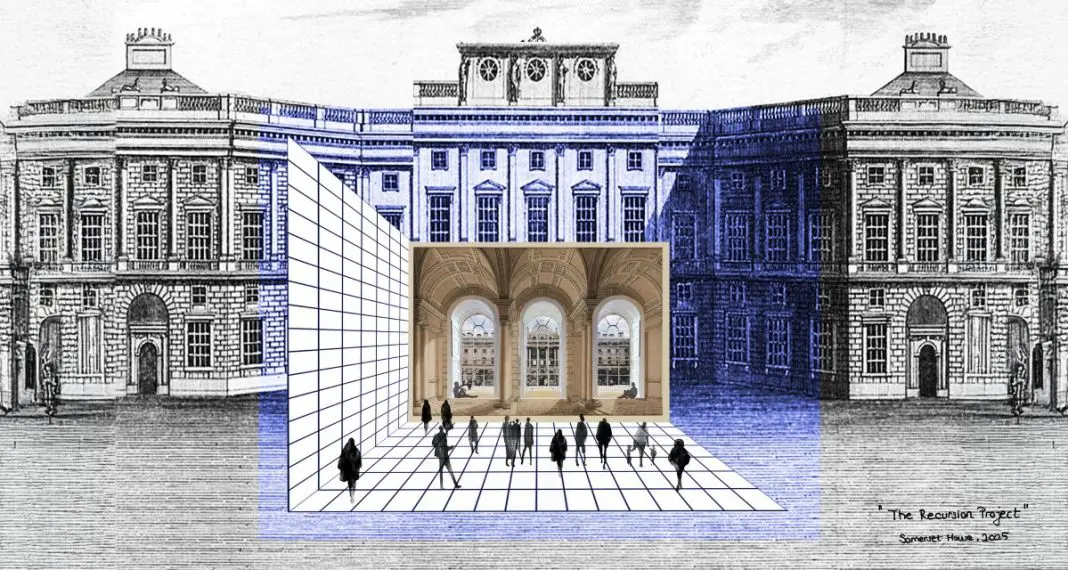
At a time when climate concerns dominate global discussions, art is emerging as a powerful driver of change. London clearly understands this: from June 5 to 29, 2025, the British capital hosted a new edition of its London Design Biennale, entirely focused on sustainability. The event, held at Somerset House, continues to spark inspiration well into July.
🌍 A Biennale under the Theme “Surface Reflections”
Bringing together designers, architects, and thinkers from over 40 countries, the 2025 edition revolved around the theme “Surface Reflections”—a poetic way to explore how design can both respond to today’s challenges and shape a more ethical and sustainable future.
From Japan to Nigeria, Latvia to Oman, national pavilions offered immersive and interactive installations questioning our relationship to materials, nature, and social responsibility.
🍃 Ecology as an Artistic Catalyst
Among the most celebrated works were those that embedded sustainability directly into their creative process. Visitors explored:
- installations made from recycled or biodegradable materials,
- solar-powered structures creating luminous environments,
- and plant-filled spaces encouraging urban biodiversity.
These projects demonstrate that environmental innovation can be as aesthetically bold as it is impactful.
🤝 A Platform for Global Dialogue
What sets the London Design Biennale apart is its mission to foster intercultural conversations through design. The event elevates voices from the Global South, Indigenous communities, and eco-activist thinkers. Art here becomes a universal language to address global crises.
As artistic director Victoria Broackes puts it:
“Design is a political act. It shapes how we live, consume, and imagine the world.”
💡 Inspiration Beyond the Event
Though the Biennale ended in late June, its influence continues. Several installations will tour across Europe or be incorporated into sustainable public initiatives.
London reinforces its place as a cultural capital of the future—proving that art is not a luxury, but a tool for planetary transformation.