
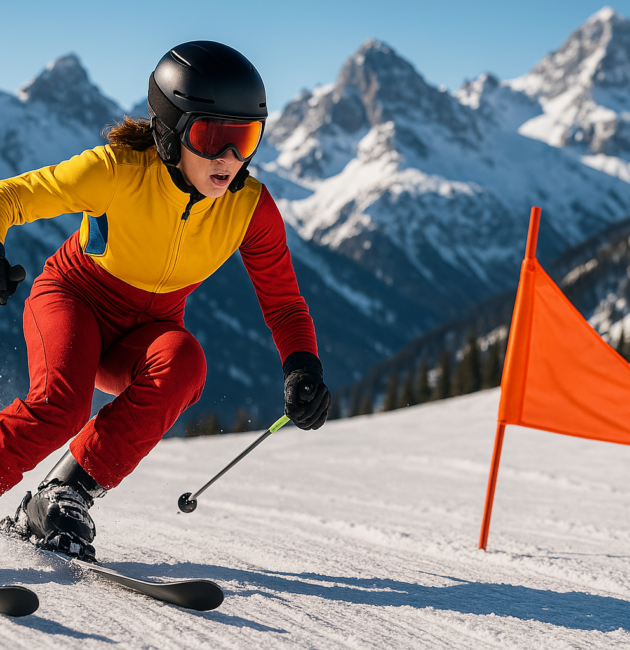
SkiCross, an exhilarating blend of speed, jumps, and tight turns, is experiencing a meteoric rise among teenagers in the Canadian Rockies. From Calgary to Whistler, this discipline attracts thrill-seeking youth eager for challenges. However, this growing popularity raises safety concerns, particularly due to the increase in injuries associated with the sport.
The Irresistible Appeal of SkiCross for Teenagers
SkiCross combines the technical elements of alpine skiing with the excitement of motocross, offering a unique experience that particularly appeals to young people. Competitions feature multiple skiers racing simultaneously down courses filled with obstacles, creating an atmosphere of intense competition and pure adrenaline.
Renowned resorts like Whistler Blackcomb offer immersive programs such as “Ski or Ride with an Olympian,” allowing young enthusiasts to hone their skills alongside elite athletes. These initiatives enhance the allure of SkiCross by providing authentic and inspiring experiences.
Alarming Statistics: A Surge in SkiCross-Related Injuries
However, this passion for SkiCross is not without risks. Emergency services in mountainous regions report a significant uptick in injuries associated with this discipline. While specific data for SkiCross is limited, the inherent dangers of high-speed disciplines like SkiCross are evident. Teenagers, in their quest for thrills, may sometimes underestimate these dangers, leading to an increase in on-slope accidents.
Safety Measures: Initiatives and Recommendations
In response to these concerns, various initiatives have been implemented to regulate and secure the practice of SkiCross:
- Specialized Training Programs: Resorts like Blue Mountain in Ontario offer dedicated SkiCross and Snowboard Cross programs focused on mastering berms, rollers, and jumps. These programs, aligned with competitive circuits of Alpine Ontario and Snowboard Ontario, aim to instill technical skills in young athletes while emphasizing safety.
- Alpine Responsibility Codes: Organizations such as Ski Safety Canada have developed conduct codes for skiers and snowboarders, emphasizing speed control, respect for others, and awareness of trail conditions. These codes serve as guides for the safe practice of snow sports.
- Use of Protective Equipment: The use of certified helmets, UV-filtering goggles, and appropriate clothing is strongly recommended to minimize injury risks. These equipment recommendations are particularly crucial for children and high-risk environments.
- Risk Awareness: The Canadian Ski Patrol encourages skiers to know their limits, take lessons to learn proper techniques, and be aware of weather conditions and potential hazards on the slopes.
The Role of Competitions and Elite Athletes
International competitions play a crucial role in promoting SkiCross and highlighting safety standards. Events like the FIS Ski Cross World Cup, held at Nakiska near Calgary, draw attention to the discipline and showcase examples of high-level, safe practices.
Moreover, Canadian athletes such as Reece Howden and India Sherret, who have participated in the Youth Olympic Games and Winter Olympics, serve as role models for young skiers, demonstrating the importance of rigorous training and adherence to safety protocols.
Future Perspectives: Balancing Passion and Safety
The current challenge lies in balancing the growing enthusiasm for SkiCross with safe practices. Ski resorts, sports associations, and educators play an essential role in educating young people about risks and preventive measures. Integrating training modules on risk management, critical decision-making, and awareness of the consequences of reckless behavior could help reduce the number of accidents.
Furthermore, collaboration among stakeholders to standardize safety protocols, improve course design, and promote a culture of shared responsibility is crucial to ensure a safe environment for all participants.
A Passion to Nurture with Caution
Extreme SkiCross continues to captivate teenagers in the Canadian Rockies, offering an irresistible combination of freedom, speed, and personal challenge. But behind the exhilaration of the runs and the excitement of competitions lies a more fragile reality: that of injured bodies, emergency medical interventions, and the increasing pressure on health services in mountainous regions.
Balancing Passion and Prevention: A Collective Responsibility
Parents, coaches, ski resorts, and the young athletes themselves must foster a culture of proactive responsibility. Encouraging calculated risk-taking, promoting supervised practice, and offering appropriate training are key to channeling this overwhelming passion sustainably.
Some resorts, like Fernie Alpine Resort and Lake Louise, are currently experimenting with awareness programs integrated into youth packages: educational video capsules shown before chairlift rides, “first response” clinics in case of accidents, and on-slope coaches available to advise young skiers in real-time. These models could well become the standard in the coming years.
SkiCross and Personal Development: A Life School
Despite the risks, many educators see SkiCross as an opportunity for personal development for young people. Learning perseverance, stress management, teamwork… Extreme sports become a springboard for building skills useful far beyond the snowy slopes.
Secondary schools in British Columbia and Alberta have even integrated SkiCross options into their sports-study programs, combining physical training, nutrition, and video performance analysis, all under educational supervision. The idea is clear: transform passion into a structured trajectory.
Conclusion: Sliding Towards Tomorrow, Together
Extreme SkiCross, this rising star of winter sports, is carving a new path in the Canadian sports landscape. As a source of wonder, achievement, and danger, it reminds us that every passion deserves to be lived consciously. If teenagers are now rushing towards jumps and icy turns, it is up to us to provide them with the tools to ensure their landings are as solid as their takeoffs.