
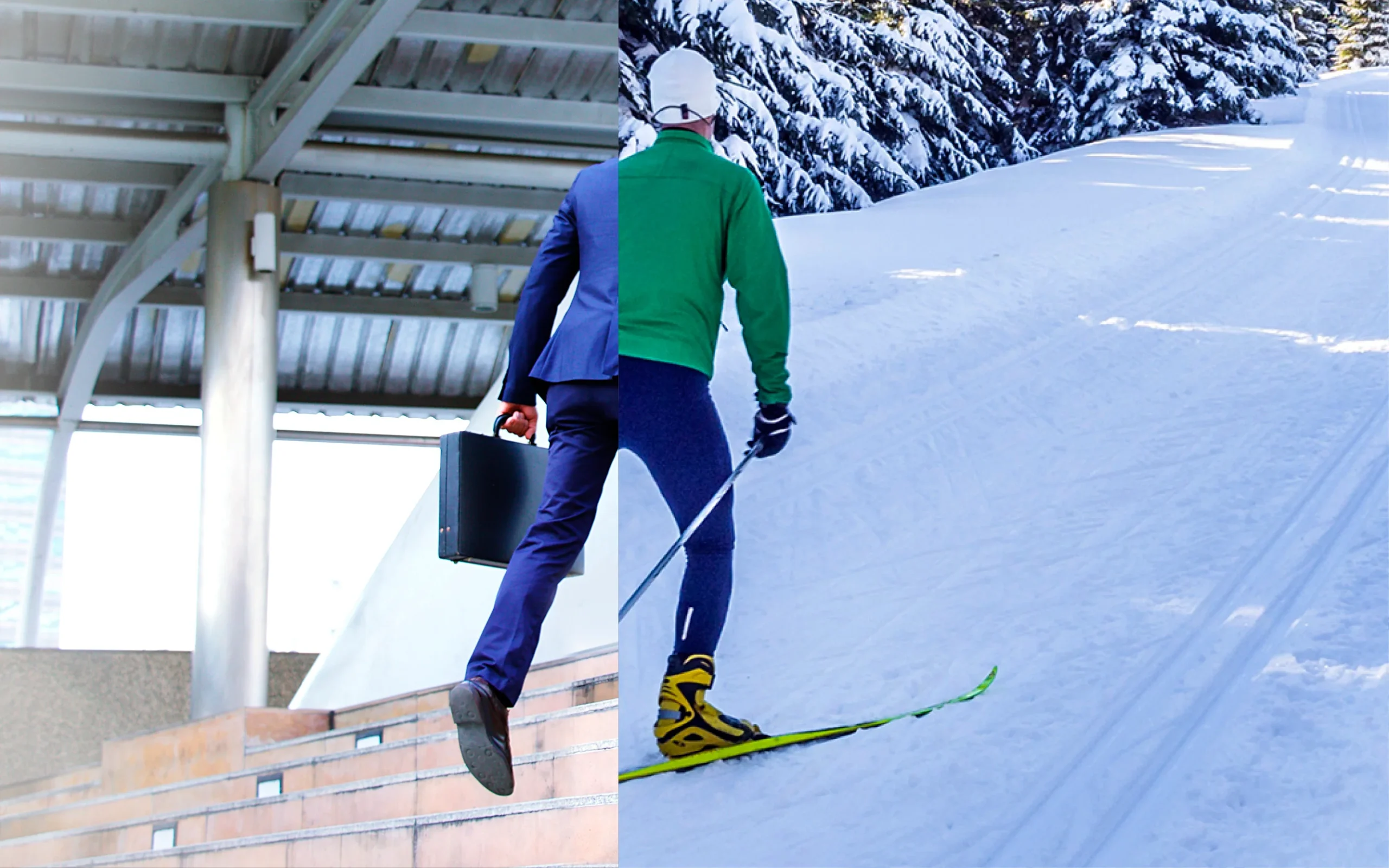
As winter approaches and Quebec’s mountains fill with snow, many people are gearing up for cross-country skiing and snowshoeing season. These winter activities demand a specific level of physical fitness to make the most of each outing and avoid fatigue. Whether you’re a beginner or a seasoned pro, these five training tips will help you build endurance, agility, and strength for peak performance this winter.
1. Build Your Cardiovascular Endurance
Both cross-country skiing and snowshoeing require strong cardiovascular fitness to sustain a steady pace over challenging terrain. Adding cardio exercises to your routine will boost your stamina and help you manage longer distances.
- Running: Outdoor runs or treadmill workouts will accustom your body to extended exertion.
- Interval training: Alternate between high-intensity sprints and recovery to build endurance.
- Cycling or swimming: These low-impact exercises offer variety while building lung capacity.
Tip : Aim for at least three cardio sessions per week to see steady progress. Solid cardiovascular endurance will help you manage steep climbs and uneven paths with ease.
Recommended Video:
Cardiovascular strengthening for cross-country skiing and snowshoeing
2. Strengthen Your Legs and Core
Strong legs and core muscles are essential for tackling snowy slopes and uneven trails. A focus on these muscle groups will make it easier to carry equipment and maintain balance on slippery surfaces.
- Squats and lunges: These exercises build strength in the quads, glutes, and hamstrings, essential for skiing and snowshoeing.
- Plank: This move targets the core, which is crucial for stability and balance.
- Glute bridge: A great exercise for the glutes and lower back, perfect for those forward-pushing motions.
Tip: Aim for strength training three times a week with varied repetitions to target deep muscle engagement.
More Information:
The 10 best exercises to prepare for skiing (physical preparation for skiing) by diétéfit
3. Work on Your Balance and Agility
Snowy, uneven terrain requires excellent agility and balance to prevent falls and maintain a steady pace. Balance training is crucial for both cross-country skiing and snowshoeing.
- Bosu ball exercises: Doing squats or jumps on a Bosu ball helps stabilize leg muscles and improve balance.
- Lateral jumps: These movements train your body for quick lateral shifts, useful on snowshoe trails and ski paths.
- Yoga and Pilates: These disciplines improve flexibility and balance by strengthening your core.
Tip: Short 15-minute sessions two to three times a week are enough to see improvements. These exercises can be done at home without complex equipment.
Training Video:
Improve your balance and agility for winter sports
4. Build Muscular Endurance for Long-Lasting Strength
Unlike sprint sports, cross-country skiing and snowshoeing require muscular endurance for sustained physical effort. Focus on strength exercises with light weights and high repetitions to develop endurance.
- Push-ups and pull-ups: These exercises build upper-body strength to help you push with poles.
- High-rep squats and lunges: These moves build leg endurance without adding bulk.
- Resistance band exercises: Perfect for gentle strength training for both arms and legs.
Tip: Aim for sets of 15-20 reps with light weights or resistance bands to build endurance without muscle fatigue.
Endurance Program:
Strengthening program for muscular resistance
5. Don’t Overlook Flexibility and Recovery
Winter sports put a lot of stress on muscles and joints, so stretching and recovery sessions are essential to avoid injury and perform your best on every outing.
- Dynamic stretching: Before each session, perform dynamic stretches to warm up muscles and joints.
- Static stretching: After exercise, hold static stretches to relax worked muscles.
- Foam rolling and massage: Use a foam roller to release muscle tension and promote recovery.
Recovery Tip : Dedicate one day a week to a longer stretching session to improve flexibility and reduce muscle soreness.
Recovery Video:
Prepare well for winter sports with 5 exercises
Get Ready for a Successful Cross-Country Skiing and Snowshoeing Season
By incorporating these five physical preparation tips into your routine, you’ll significantly improve your performance and reduce your risk of injury during cross-country skiing and snowshoeing season. A balanced approach to endurance, strength, agility, and recovery will allow you to fully enjoy Quebec’s winter landscapes while boosting your overall fitness. Prepare for a memorable winter season and get ready to explore the snowy trails to the fullest!