
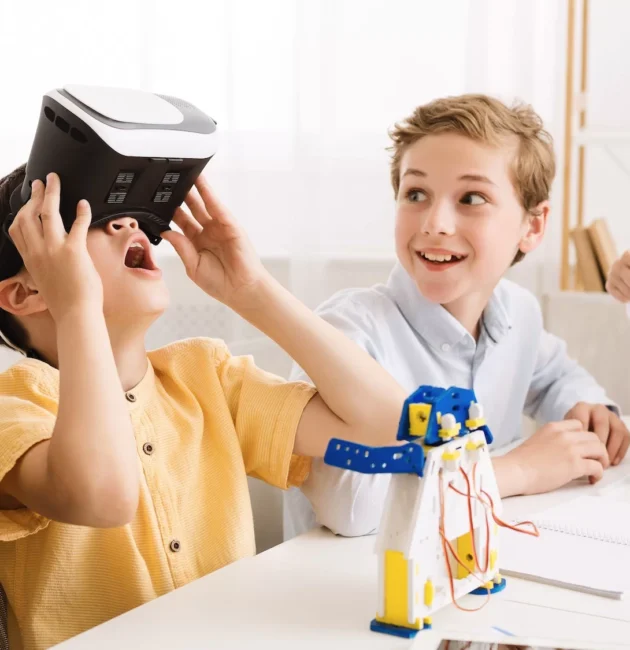
Alice thought she would fail her “Archaeological Digs for Kids” assignment—but she ended up with an A+ and glowing remarks. Her secret? A mix of creative thinking and using augmented reality (AR) tools to study ancient artifacts at the last minute.
This is not a futuristic fantasy—it’s augmented reality in education at work.
🚀 A New Era for Learning
As online learning platforms continue to grow, educators are turning to immersive technologies like AR to make education more engaging and effective. Augmented reality enhances real-world experiences by overlaying digital content—bridging the gap between physical learning and virtual possibilities.
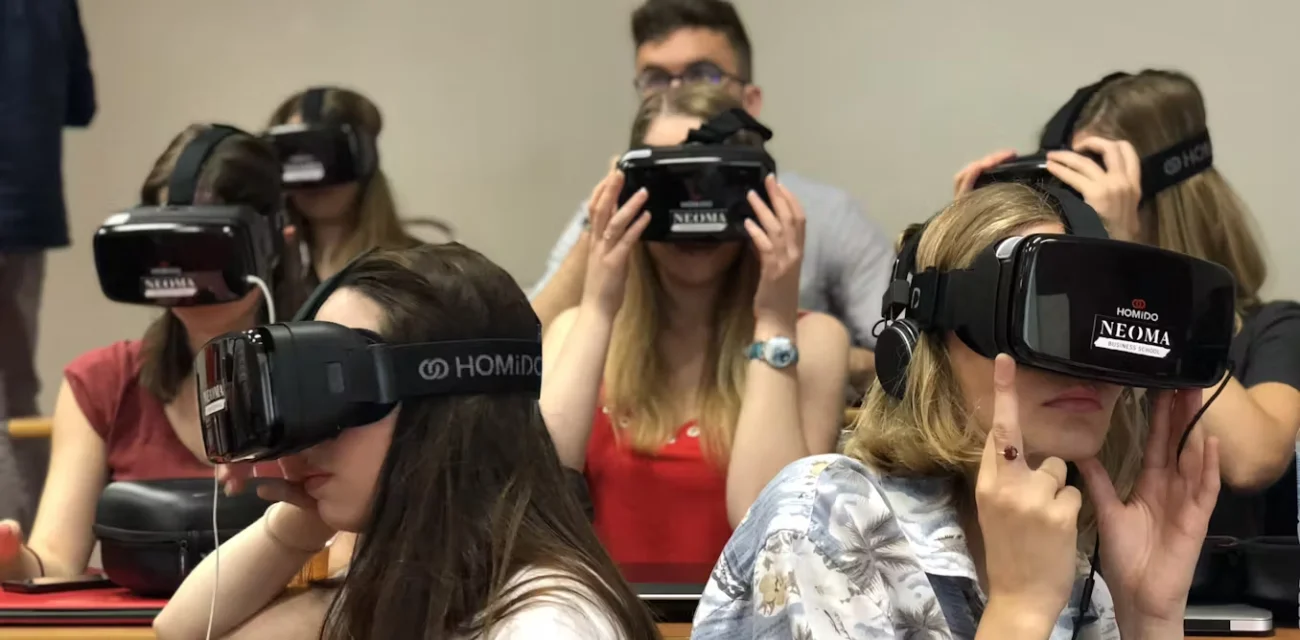
📈 The Market Is Booming
According to industry forecasts, the AR-in-education market is expected to grow from $3.47 billion in 2023 to over $55.84 billion by 2033, with a 32% CAGR. This explosive growth reflects the rising demand for tech-enhanced, student-centered learning.
🎓 How Online Schools Use AR in Education
- Virtual Labs: Students conduct simulated dissections or chemistry experiments without real specimens or labs—saving cost and boosting safety.
- Interactive Textbooks: No more heavy bags. AR-powered textbooks offer 3D visuals, animations, and quizzes that make studying more dynamic.
- Virtual Field Trips: Visit museums, historical sites, or ecosystems around the world—from the living room.
- Collaborative Learning: Students co-create and solve problems in shared AR environments, enhancing teamwork and creativity.
- Skill Development: Hands-on AR tools help students practice real-world tasks—building spatial awareness and critical thinking.
✅ Benefits of AR in Education
- Real-world experience from home
- Improved accessibility for students with disabilities
- Increased engagement and curiosity
- Flexible, remote learning
- Higher participation and motivation
🧑🏫 Tips for Teachers
- Define your learning goals clearly.
- Choose the right AR tools for your lesson.
- Offer training to both teachers and students for a smoother transition.
❓ FAQ
Q: How can AR be used in the classroom?
A: Through interactive books, science simulations, field trips, or group projects.
Q: What’s the difference between AR and VR in education?
A: AR enhances the real world; VR creates a completely new virtual environment.
Q: Can AR support remote learning?
A: Absolutely—it brings hands-on learning to even the most remote locations.