


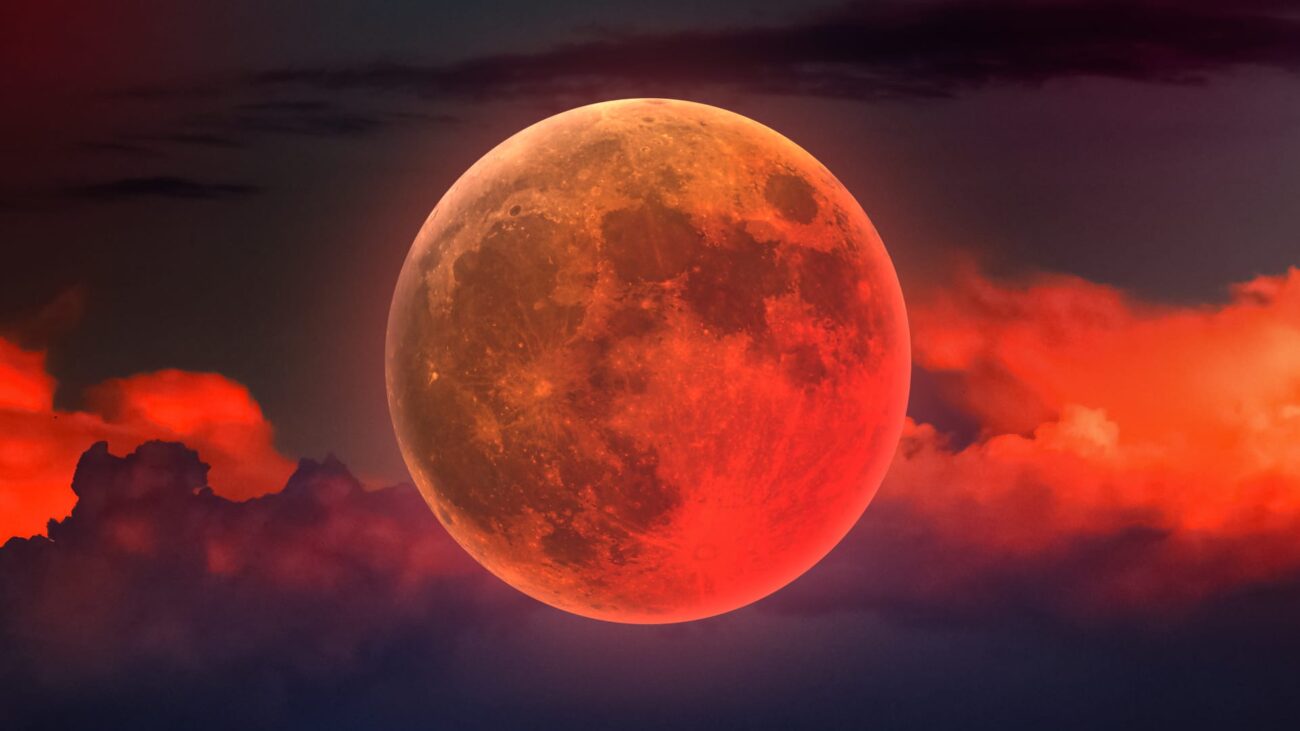
The term “Blood Moon” is not scientific—it’s simply an eye-catching phrase. It actually refers to a total lunar eclipse. During this phenomenon, the Moon passes through Earth’s shadow, and although it is no longer lit directly by the Sun, some sunlight still reaches its surface through our atmosphere. The result is a beautiful red hue that gives the Moon its “bloody” appearance.

The Total Lunar Eclipse on March 13-14
Media outlets, particularly in the United States, are buzzing about a total lunar eclipse scheduled from the night of March 13 to the early hours of March 14. Observers in North America (the US and Canada), western South America, as well as in Martinique and Guadeloupe, will enjoy prime viewing spots. In Europe, only a lucky few—particularly residents of Brittany, Cotentin, or along parts of the Atlantic façade—will be able to see a complete eclipse just before the Moon sets at dawn.

Partial Viewing for the Rest of the Region
In other areas, the eclipse will be only partial. Starting at 6:09 AM, Earth’s shadow will gradually begin to cover the Moon. With an unobstructed view towards the west, you can continue watching the eclipse until the Moon finally sets. No special equipment is required to enjoy this event, though binoculars or a telescope can certainly enhance the experience.
Watch It Live Online
For those eager not to miss any details, the Virtual Telescope Project will stream the event live starting at 5 AM (Paris time) on March 14. This online broadcast is a great way to catch the full spectacle in real time.
A Celestial Show Like No Other
Even if you aren’t in an optimal location for the full eclipse, it’s still worth looking up. Remarkable contrasts and details on the Moon’s surface will be visible even before the eclipse reaches totality. And if you happen to miss this event, mark your calendar for another lunar eclipse scheduled for the night of September 7-8, 2025—though, once again, the best views won’t be available in France.


