


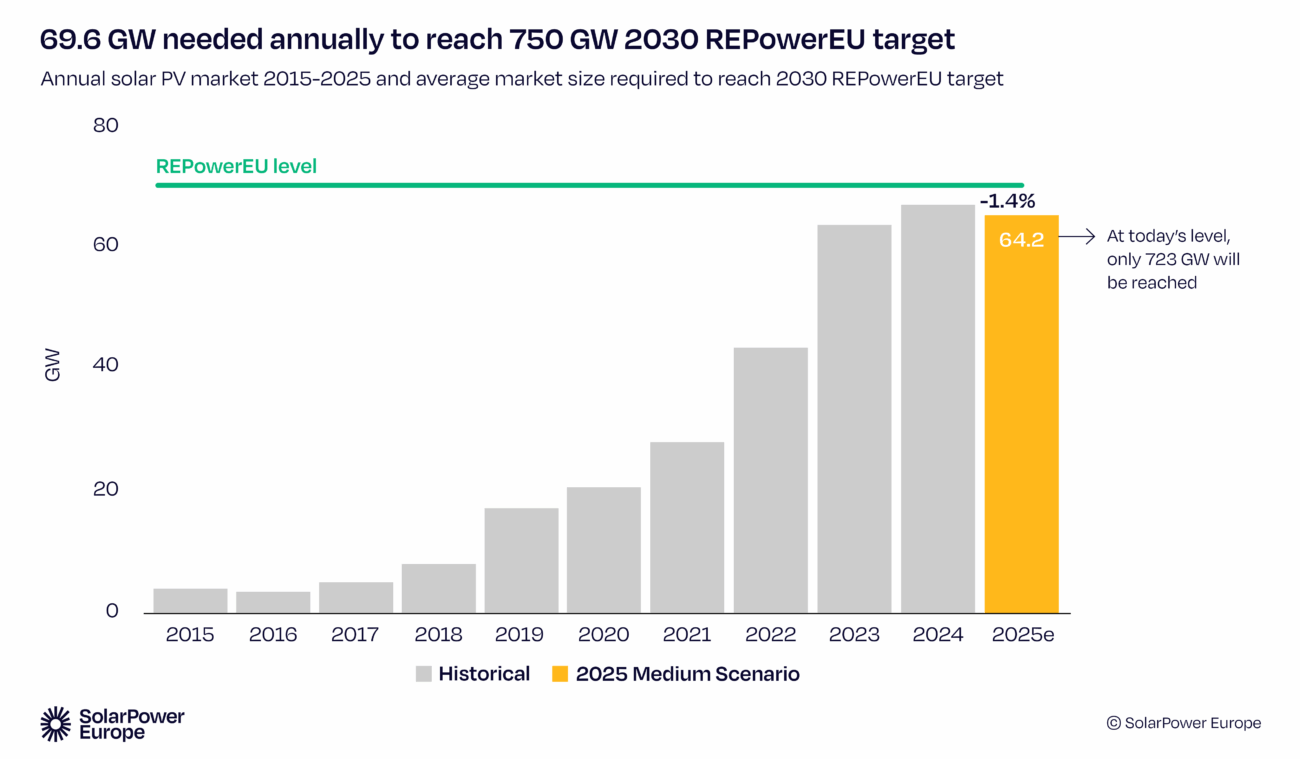
According to SolarPower Europe, the European Union will see its first drop in new solar capacity in ten years. In 2025, new installations are projected to fall by 1.4%, from 65.1 GW in 2024 to 64.2 GW, marking the first decline since 2015.
The End of a Boom Cycle
After spectacular growth (+47% in 2022, +51% in 2023), the solar boom is slowing down. The contraction reflects growing challenges to maintain renewable energy momentum in a tighter economic context.
Rooftop Slowdown, Utility-Scale Resilience
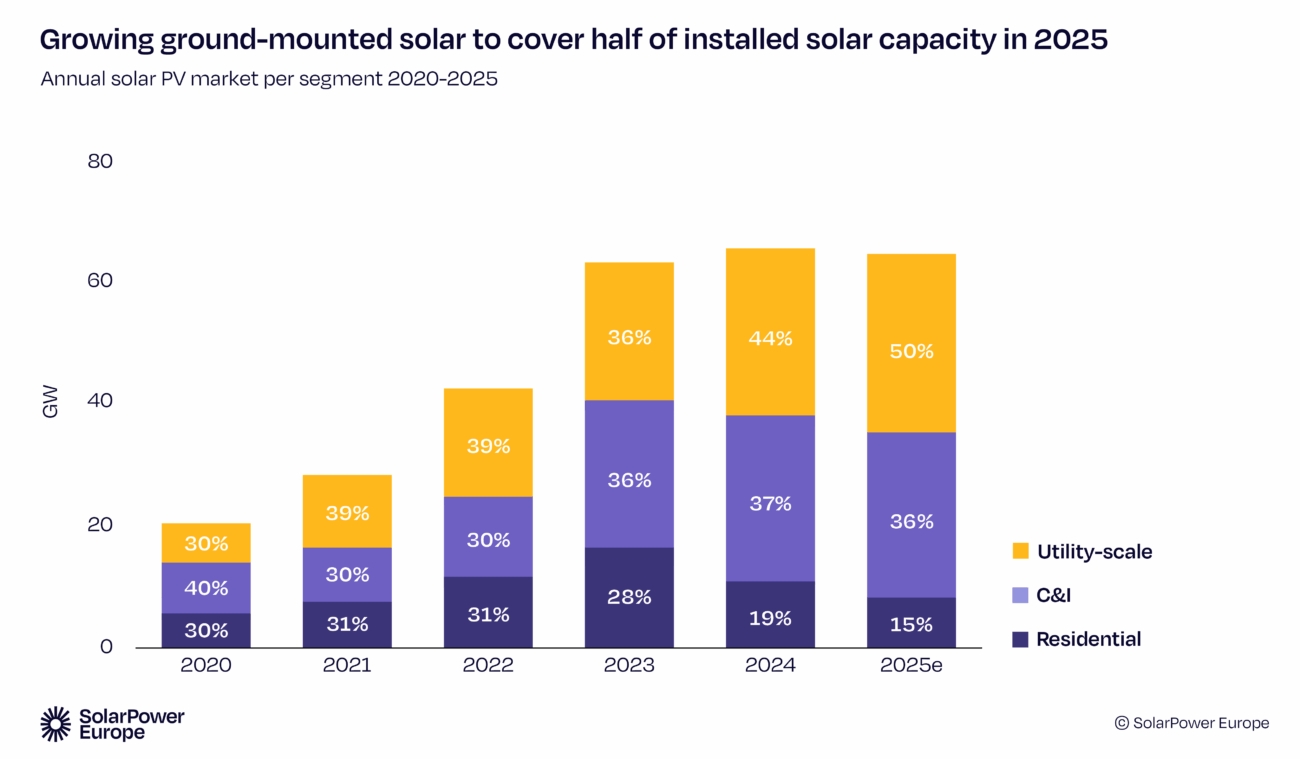
The decline is driven mainly by the residential sector. Household rooftop systems now account for only 15% of additions, compared to 30% during 2020–2023. Reduced subsidies in Germany, France, and the Netherlands have cooled consumer adoption.
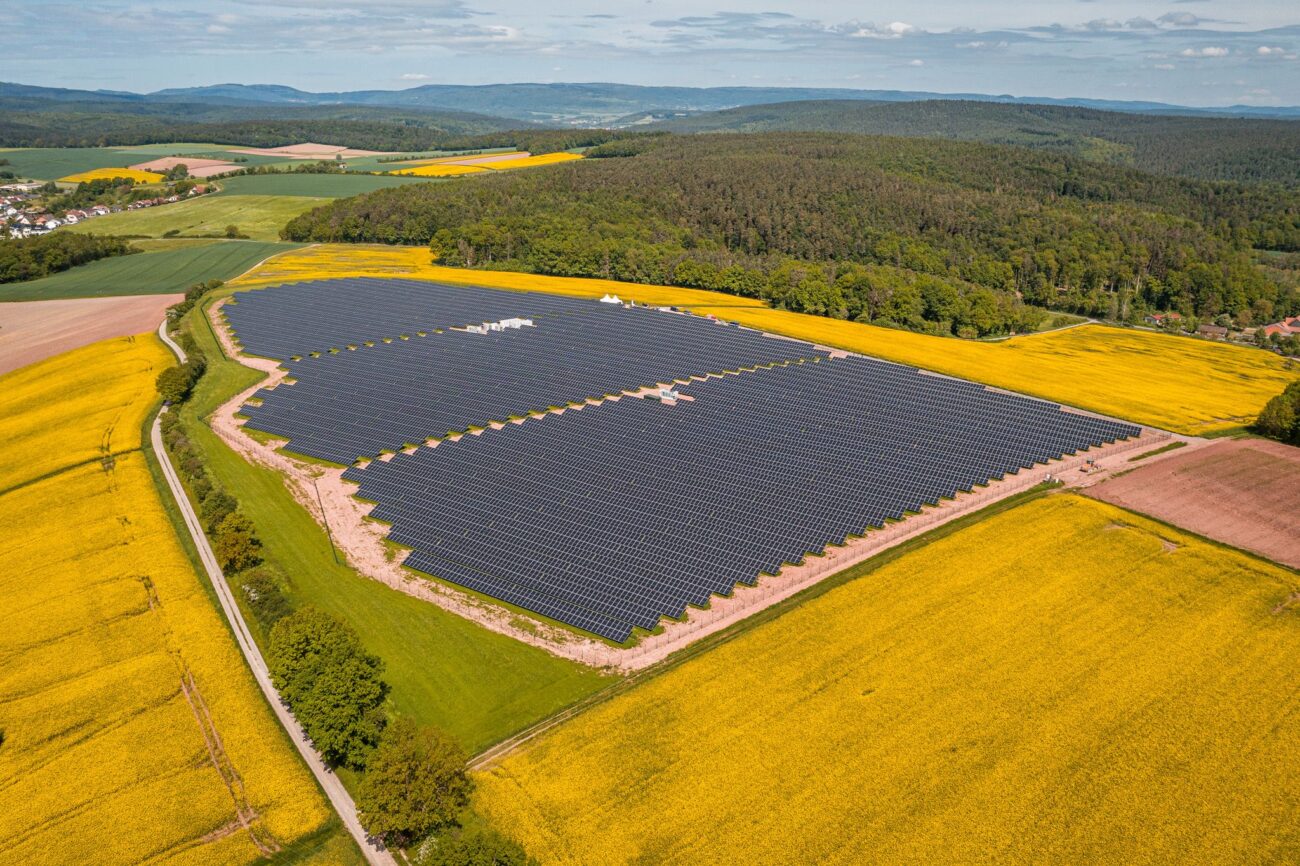
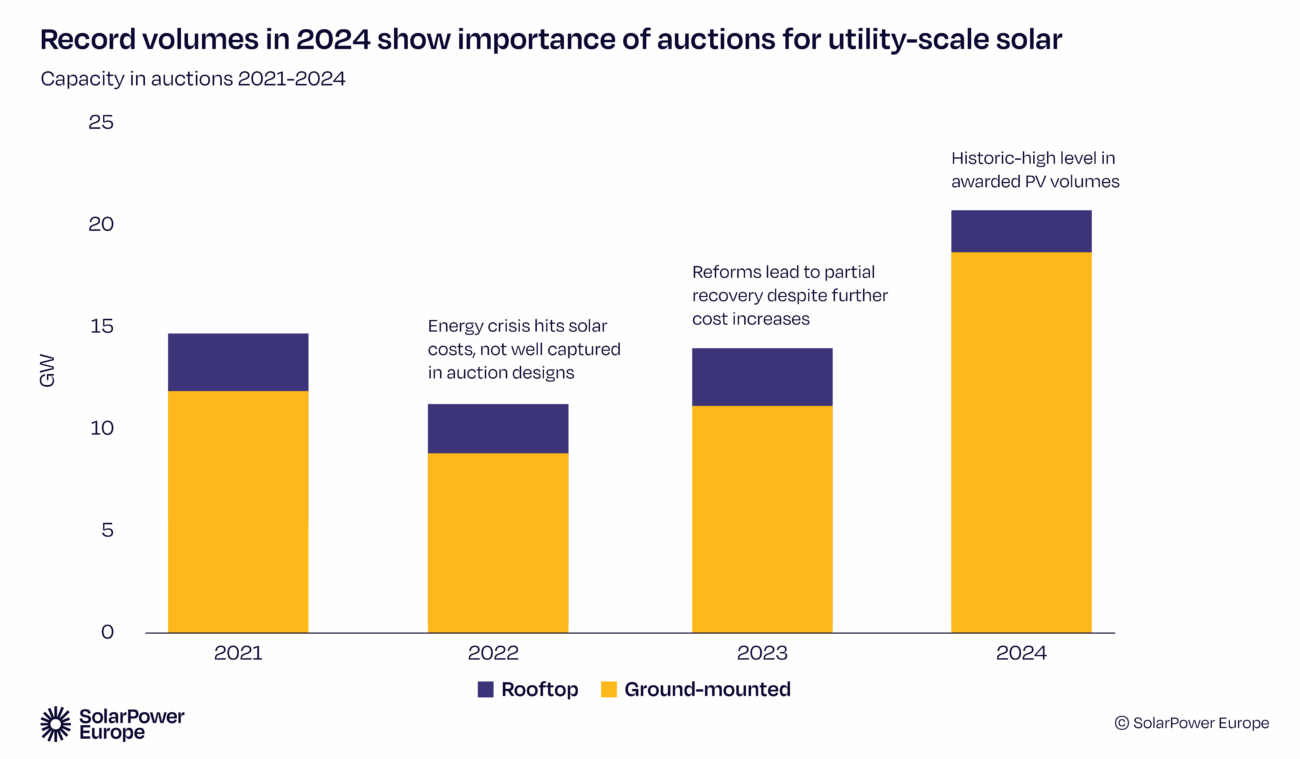
In contrast, utility-scale solar remains resilient. Large projects awarded via auctions, often integrated with storage or hybrid systems (solar + wind), make up nearly half of all new capacity in 2025 — proof of the sector’s maturity.
2025 Target Met, 2030 at Risk
The EU will still hit 400 GW by the end of 2025, fulfilling the REPowerEU plan milestone. But the 2030 goal of 750 GW looks in jeopardy: at the current pace, the EU will reach only about 723 GW, missing the target by 27 GW.
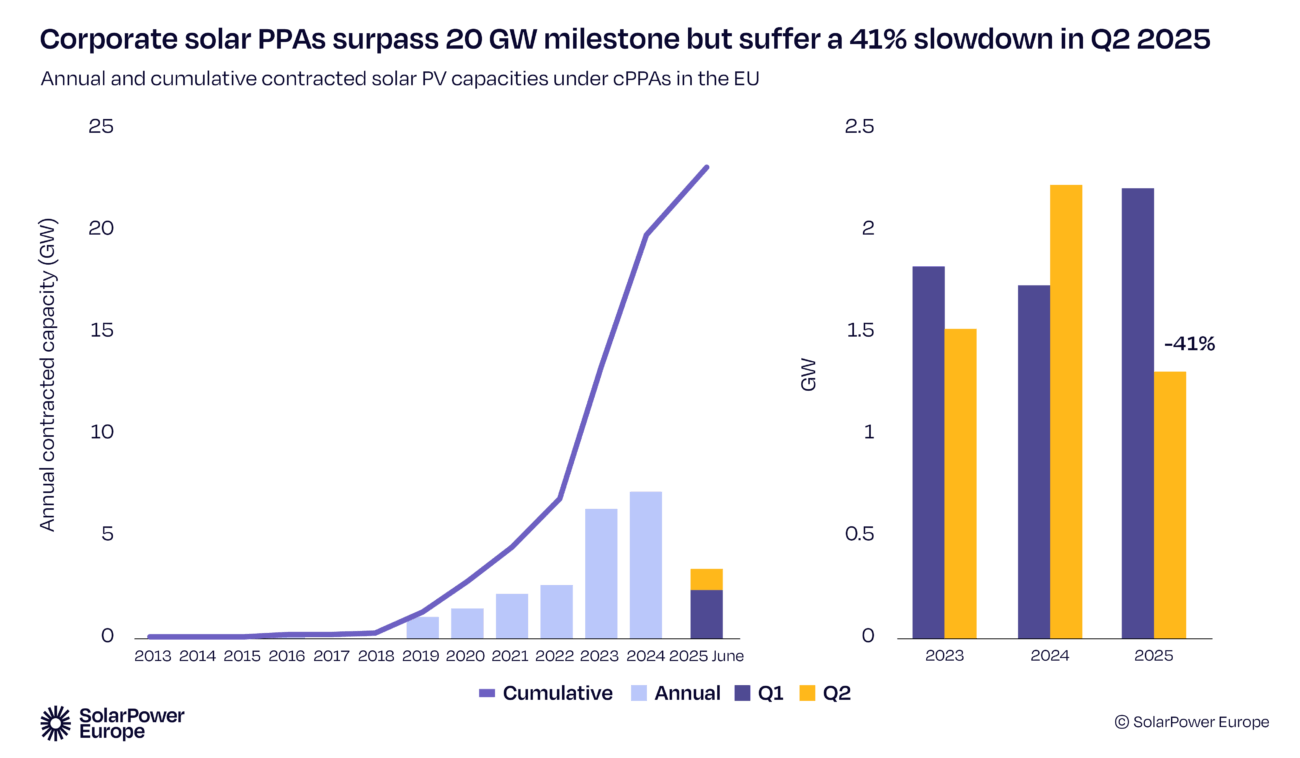
A Warning Signal
This symbolic decline carries weight. Dries Acke, Deputy CEO of SolarPower Europe, warned:
“The market is slowing down when solar is supposed to accelerate — this needs policymakers’ full attention.”
Ensuring storage, grid flexibility, and stronger renewable frameworks will be crucial to sustaining solar’s future.


